There was a time when going off-grid meant going dark. No emails, no video calls, no way to send the contract your client is waiting on. Cell towers thin out fast past the last gas station, and even the best hotspot is just a brick of plastic when the bars disappear.
Starlink changed that. And the Starlink Mini changed it for people who don't have room for a full-size dish — or the power budget to run one.
What the Mini actually is
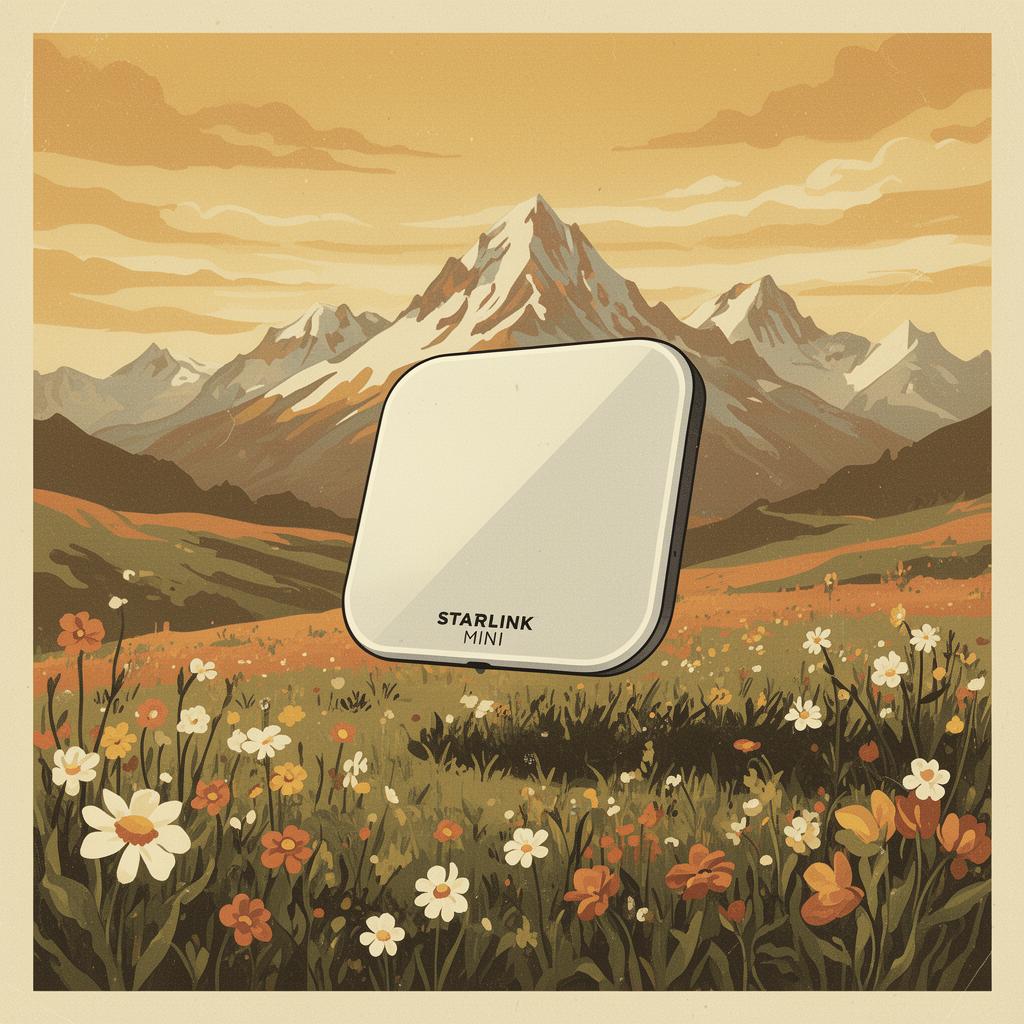
The Starlink Mini is a compact, all-in-one satellite terminal about the size of a thick laptop. It combines the dish and the router into one lightweight unit you can set on a picnic table, strap to a roof rack, or stash in a drawer when you're not using it. It draws less than 100 watts — meaning a modest lithium battery and a few panels can keep it running indefinitely.
Speeds are real-world fast: 50–100+ Mbps down, 10–20 Mbps up. That's enough for HD video calls, uploading listing photos, streaming a movie after a long hike, or two people working simultaneously without stepping on each other.
Why it matters for RVers
Most RVers don't need internet every day. But the days you do need it — a closing that moved, a buyer who wants to tour a property remotely, a weather system you need to track — you really need it. The Mini gives you a connection independent of cell towers, in places where even satellite phones struggle.
We mount ours on a quick-disconnect base. Fair weather, it rides on the roof. Windy or tree-covered, we pull it down and set it on a tripod in a clearing. The whole operation takes under two minutes. When we're done, it goes back in its padded case and lives in the closet until the next morning someone needs DocuSign from a trailhead.
Power and portability
The full-size Starlink is a power hog. The Mini is the opposite. At roughly 20–40 watts during normal use and under 100 watts at peak, it plays nicely with modest solar and lithium setups. We run ours through the house battery, and on a sunny day the panels handle it without touching our reserve. On cloudy days, it still runs for days before we need to fire the generator.
And the size matters. It fits in a backpack. That means you can carry it to the beach, the summit, or the riverside campsite where the RV can't go. The whole point of the road is leaving the rig behind sometimes. The Mini lets you bring the connection with you.
The best Starlink Mini resources
There's more to learn than we can fit on one page. These are the sites, communities, and guides we keep coming back to:
The source of truth. Specs, pricing, availability, and the official coverage map.
Mobile service plans built for vehicles, boats, and roaming. Pause anytime, roam anywhere.
Step-by-step setup, troubleshooting, and firmware updates straight from SpaceX.
Real-world speed tests, mount ideas, and honest feedback from people using it in the wild.
The definitive guide to RV internet. Deep dives on Starlink, cellular boosters, and hybrid setups.
Visual walkthroughs of roof mounts, tripod setups, and quick-disconnect rigs from fellow travelers.
Bottom line
The Starlink Mini isn't cheap, and it isn't invisible. It takes power, a clear view of the sky, and a little patience when the satellites are swapping overhead. But for anyone who needs to stay connected past the last cell tower — real estate agents, remote workers, families who want a movie night in the desert — it's the difference between "almost there" and "actually there."
We don't miss the days of driving to town for a signal. We don't miss the café with the one good corner and the overpriced coffee. We work where we park. And when the day is done, we close the laptop and watch the stars come in — over a real sky, not a screen.